

The problem in the Valley:
"PM2.5s" are microscopic particles that can be breathed in, absorbed into the bloodstream and cause damage throughout the body
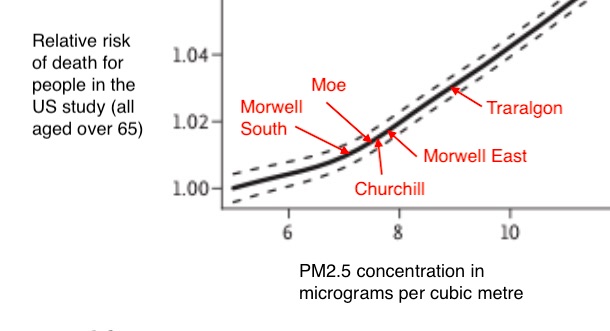
A United States study in 2017 of over 60 million people aged 65 and over found that PM2.5 concentrations as low as 5 micrograms per cubic metre of air can harm health and increase risk of death
In 2019 the average concentrations of PM2.5s measured in Latrobe Valley towns were between 7.1 and 8.9 micrograms per cubic metre (7.1 in Morwell South, 7.5 in Moe, 7.6 in Churchill, 7.8 in Morwell East and 8.9 in Traralgon - data from EPA Victoria)
Here are those pollution levels plotted on a graph adapted from the US study that correlated increased pollution exposure with an increased risk of death:
Another study in Brisbane, published in 2018, found that PM2.5 levels in this range were also associated with increased risk of preterm birth and low birth weight for pregnant mothers
The same study found that exposure to ozone was correlated with the same adverse pregnancy outcomes around levels that were average for Morwell South and Traralgon in 2019 (as per EPA data these levels were 17.5 parts per billion for Morwell South and 16.5 parts per billion for Traralgon; ozone levels are not monitored by the EPA in other Latrobe Valley towns)
Where does the pollution come from?

Other parts of Gippsland

Coal pollution must be better regulated
Latrobe Valley coal-fired power stations are currently allowed to emit far more pollution than similar power stations in the United States, Europe and China. The following comparison table is an excerpt from Environmental Justice Australia's 2018 report "Toxic and Terminal":

Since that report was written European limits on pollution have lowered even further
Victorian limits on pollution from coal-fired power stations are far more lax than those in other countries and it's putting Latrobe Valley citizens' health at risk. That's why we're calling on the Victorian Government to reduce air pollution and to properly support the Valley in a just transition from coal to clean energy.